Reading Fluency Activities for NWEA RIT Bands 121-230
If you’ve got MAP scores in hand and you’re trying to figure out what each child actually needs to practice next, this is the post for that. You’ll find reading fluency activities sorted by RIT band from 121 through 230, plus a free sample worksheet set at the bottom that’s built around the same band structure.
The whole point of organizing fluency work by RIT band instead of by grade is that two readers in the same grade can be eighty points apart on MAP, and they don’t need the same practice. A band-by-band approach lets you pull a small group, hand each kid the right level, and stop guessing.
Why Reading Fluency Matters for MAP Growth
Fluency is the bridge between decoding and comprehension. A reader who’s still sounding out every word can’t hold the meaning of the sentence, and that shows up directly on MAP. The Reading test is timed and dense, and students who read slowly run out of working memory before they get to the questions.
Targeted fluency practice helps because it:
- Frees up working memory so kids can focus on what the text means, not just what the words say
- Builds the automaticity that MAP Reading rewards in its passage-level questions
- Gives you something specific to track week to week instead of waiting for the next testing window
- Closes gaps without piling on more worksheets that aren’t matched to the right level
Stop the guessing game….
When parents and teachers see the same roadmap, everything changes for the child in between.

What Are RIT Bands in Reading?
RIT stands for Rasch Unit. The score is a measure of what a student is ready to learn next, not where they sit relative to a grade. Two third-graders can land at RIT 165 and RIT 215 on the same MAP Reading test, and that gap means they need different reading practice on Monday morning.
Bands are just ten-point chunks of the RIT scale. Sorting your readers into bands is the fastest way to plan small groups, intervention blocks, and centers without guessing.
Common Reading RIT Bands in K-5:
- 121-140: Pre-readers and emerging readers. Letter recognition, phonemic awareness, beginning sounds, first sight words.
- 141-170: CVC decoding, blending, sight word automaticity, short predictable sentences.
- 171-200: Multi-syllable decoding, fluent sentence reading, building stamina with short passages, beginning prosody.
- 201-230: Grade-level text, expression and phrasing, fluency in service of comprehension, nonfiction stamina.
If you’re already running guided reading or pulling small groups, you’ve done the hard part. The RIT band gives you the exact zone of growth for each child so the practice you assign actually moves the needle.
How to Find Your Student’s RIT Band on the MAP Report
If you’ve never pulled a band off a MAP report before, here’s the quick version.
Open the Student Profile report or the Class Roster report in your NWEA dashboard. The big number near the top of each student’s row is the RIT score. That’s the one you want.
To find the band, round the RIT score down to the nearest ten. A reader with a 167 is in the 161-170 band. A reader with a 184 is in the 181-190 band. The Learning Continuum that NWEA provides splits its skill suggestions into ten-point bands too, which is why this matches up.
If you want to track multiple students at a glance, the free NWEA score tracker on this site is built for exactly that. Print one page per testing window and you’ve got fall, winter, and spring side by side.
Reading Fluency Activities by RIT Band
What follows is the band-by-band breakdown. Each section gives you four activities you can run in a small group, a literacy center, or a one-on-one intervention, plus an instructional tip and a worksheet sample. Pick the band that matches your reader’s MAP RIT score and start there.
RIT Band 121-130: Pre-Readers
Readers in this band are still building the foundation. They’re learning that letters carry sounds, that print moves left to right, and that words are made of pieces you can pull apart and put back together. Most of the practice here is oral and tactile, with a small amount of print exposure.
- Letter-Sound Hunts: Say a sound, kids find the letter card or point to it on a chart. Five minutes, no prep.
- Beginning Sound Sorts: Picture cards sorted by initial sound. Build the auditory discrimination that decoding depends on later.
- Concept of Word with Pointers: Read a short rhyme aloud while the child points to each word. This is the moment one-to-one print awareness clicks.
- Environmental Print Reading: Cereal boxes, signs, name labels. The “I can read that” win matters more than the words themselves at this stage.
Instructional Tip: Keep sessions short and oral-heavy. Print exposure should feel like a treat, not a chore.
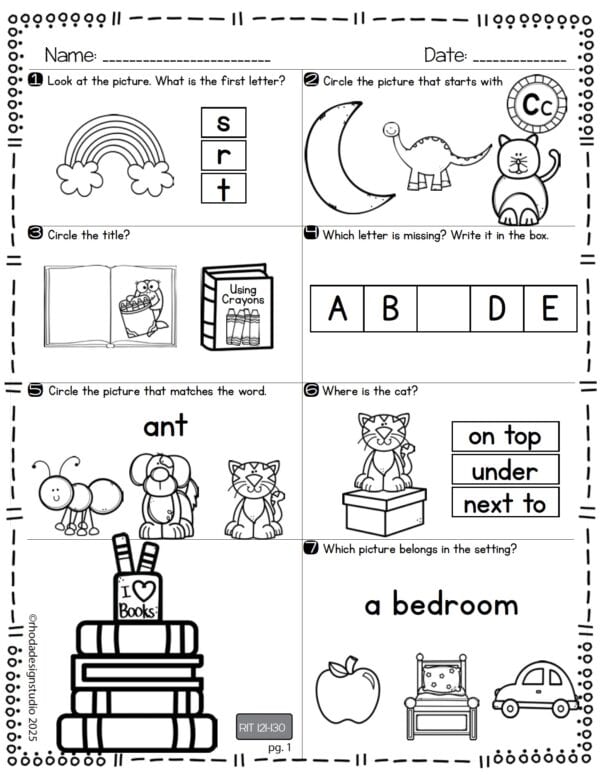
RIT 121-130
RIT Band 131-140: Letter-Sound Bridges
Readers here are starting to map sounds onto letters reliably. They can identify most letters, name common beginning sounds, and they’re ready to start blending two or three sounds into a word.
- Sound Boxes (Elkonin Boxes): Three-box mats with chips. Say a word, push a chip into each box for each sound. Builds segmenting and blending in the same activity.
- Picture-Word Matching: Decode a simple CVC word, find the picture that matches. The match itself is the reinforcement.
- First Sight Word Stack: Five to ten high-frequency words on cards. Flash through, set aside the ones they got, return to the misses.
- Tap-the-Word Reading: A short predictable sentence. The reader taps each word with a finger as they say it. Builds tracking and slows the rush.
Instructional Tip: Decoding gains here are sound-by-sound, not word-by-word. Every blend they nail is a real win.
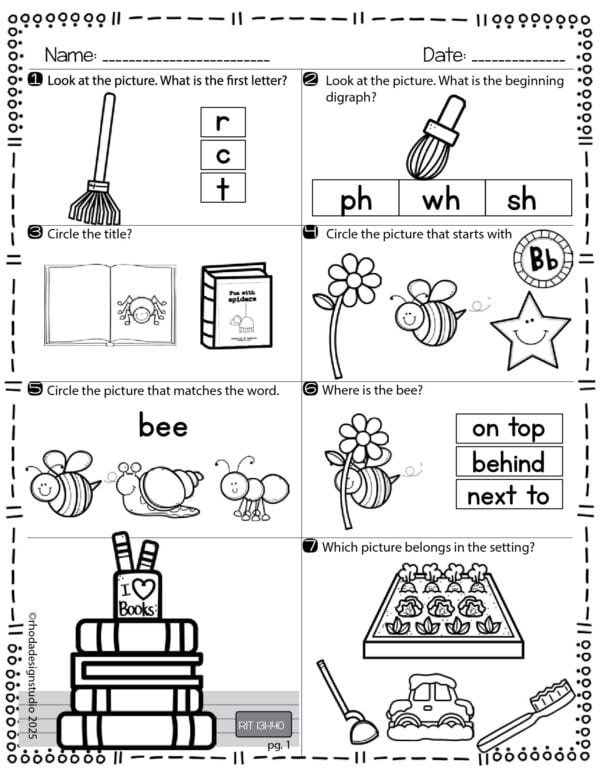
RIT 131-140

RIT 141-150
RIT Band 141-160: CVC Decoding and Early Sentences
By this band, readers can blend three-sound words on their own. They’ve got a small bank of sight words and can read a short predictable sentence with support. The work now is moving them from sounding out every word to recognizing common words on sight, so they have brain-space left for the harder ones.
- CVC Word Ladders: Change one letter at a time to make a new word. Cat to bat to bag to big. Builds phoneme manipulation and decoding speed in one go.
- Sight Word Speed Drills: Twenty words on a sheet, one minute, count how many they read correctly. Track the number across a week so the kid can see the line going up.
- Predictable Pattern Sentences: “I see the cat. I see the dog. I see the bus.” The repeated frame frees them to focus on the one new word per line.
- Echo Reading: You read a line, the kid reads it back. Builds prosody, phrasing, and confidence at the same time.
Instructional Tip: Pick texts where roughly nine out of ten words are already easy. Frustration here is the enemy of fluency.

RIT 151-160

RIT 161-170
RIT Band 161-180: Building Sentence Fluency
Readers in this band can hold a sentence together. They’re moving from word-by-word reading toward phrase-by-phrase reading, and that’s where stamina starts to build. Most of these readers are first or second grade, but you’ll see fourth and fifth graders here too if they’re getting intervention support.
- Phrase-Cued Reading: A short passage with phrase boundaries marked by slashes. The reader reads in chunks instead of word-by-word. Pre-prep the slashes for them.
- Repeated Reads: Same short passage, three times across a week. Track words correct per minute on the third read. The growth across a week is the point.
- Two-Syllable Word Sorts: Sort cards by syllable type, like closed (cat-fish) versus open (mu-sic). Builds the longer-word decoding that this band needs.
- Buddy Reading with a Tracker: Two readers, one passage, take turns paragraph by paragraph. The non-reader holds a pencil and points to any miss for the reader to fix.
Instructional Tip: Stamina is real. Two minutes of fluent reading is more useful than ten minutes of slow grinding through a too-hard text.

RIT 171-180
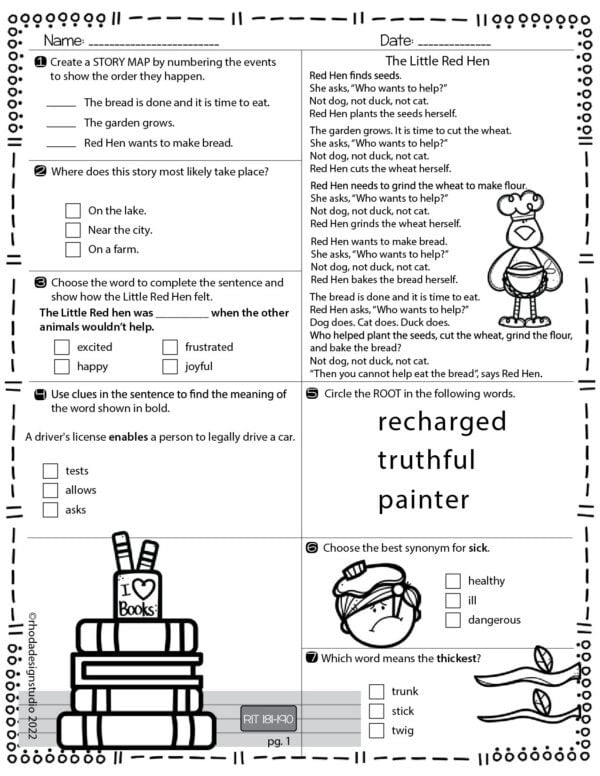
RIT 181-190
RIT Band 181-200: Prosody and Comprehension Bridge
Readers here can decode most grade-level text. The work is now about making the reading sound like talking, because prosody is what unlocks comprehension. If a kid can read a paragraph fluently but can’t tell you what it was about, they’re parsing words but not meaning, and the fix is in the phrasing.
- Reader’s Theater Scripts: Short scripts with character lines. Built-in repeated reading with a real audience. Strong for prosody because the kid has to think about expression.
- Punctuation Pause Practice: Read a passage and exaggerate the commas, periods, and question marks. Then read it again at normal speed. The pauses stick.
- Self-Recorded Reads: Kid records themselves on a tablet, then listens back. They’ll catch their own mistakes faster than you’d believe.
- One-Sentence Retell: After a short read, the reader gives you one sentence about what just happened. Builds the comprehension-fluency loop.
Instructional Tip: Listen for whether they’re reading at the text or through it. Through is the goal.
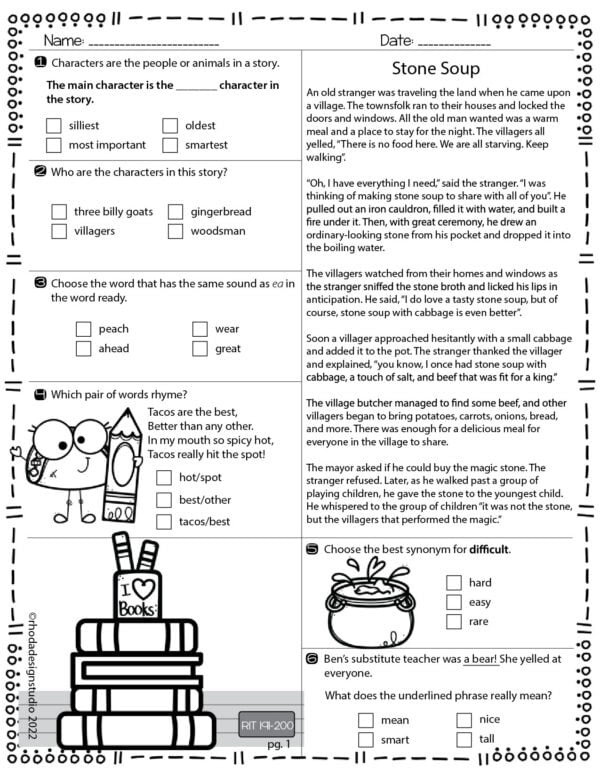
RIT 191-200

RIT 201-210
RIT Band 201-230: Grade-Level Fluency and Stamina
By this band, readers can handle grade-level text. The fluency work is no longer about decoding. It’s about reading long enough, fast enough, and with enough expression that they can extract the meaning of multi-paragraph passages without their attention drifting. Nonfiction stamina becomes a real practice target here.
- Cold-Read Timed Passages: A passage they haven’t seen before, one minute, words correct per minute. The “cold” part matters because that’s what MAP measures.
- Nonfiction Read-Alouds with Vocabulary Stops: Read a short article aloud together, pause at hard words, define them, keep going. Builds the academic vocabulary that grade-level passages assume.
- Choral Reading with Expression Targets: Whole group reads together, you call out the expression target (“read it like you’re nervous, like you’re excited, like you’re explaining”). Prosody work that doesn’t single anyone out.
- Read-and-Mark: Reader makes light pencil marks at confusing spots, you debrief at the end. Builds metacognition along with fluency.
Instructional Tip: Pair fluency with content learning where you can. A nonfiction passage about volcanoes does double duty.

RIT 211-220
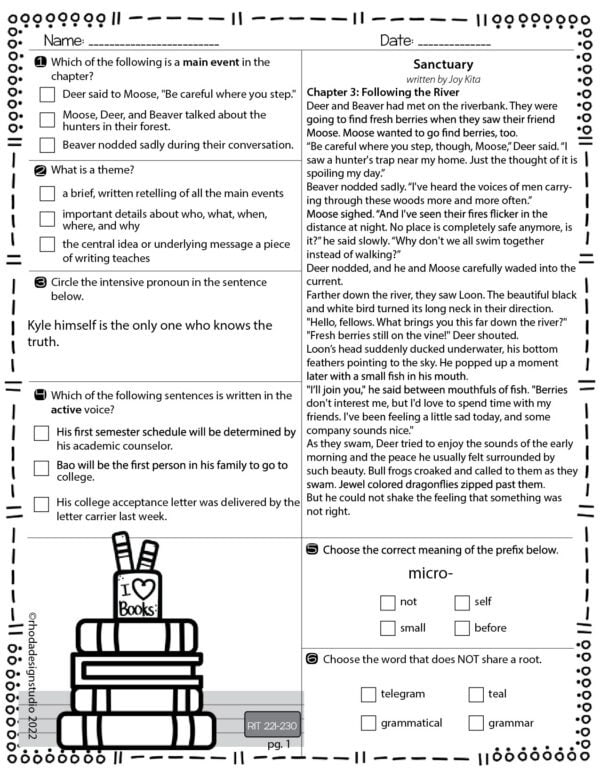
RIT 221-230
Using MAP Data to Plan Your Reading Groups
Once you’ve got MAP RIT scores in hand, the planning work goes faster than most teachers expect. The trick is to stop sorting by grade and start sorting by band.
A workable weekly setup looks like this:
- Sort your roster by RIT score, low to high
- Group students whose scores fall within twenty points of each other
- Pull the matching band activities from above for each group
- Run fluency in twelve to fifteen minute blocks, three to five times a week
- Track words correct per minute or sight word counts in the same notebook so you can see growth without rebuilding the system every Monday
This is the same approach interventionists use in pull-out groups, and it works in a regular classroom too. Once the bands are set, the planning is mostly done.
Common Reasons Reading Fluency Stalls (And What to Do)
If you’ve been running fluency practice for a few weeks and the RIT score isn’t moving, the issue is usually one of these.
The text is too hard. Fluency practice works in the just-right zone, where roughly nine out of ten words are easy. If the reader is decoding more than one word in ten, drop the text level. Practicing with frustration text builds frustration, not fluency.
The text is too easy. The opposite problem. If the reader breezes through with no errors and no growth in words correct per minute, you’re maintaining what they already had. Move up a band’s worth of text and watch what happens.
The decoding hasn’t caught up. A reader stuck below RIT 160 who’s getting fluency practice with multi-syllable words is being asked to run before they walk. Pause the fluency block and put a week of pure decoding work in front of them. The fluency comes back faster than you’d expect.
It’s a comprehension issue, not a fluency one. Some readers sound fluent and still don’t understand what they read. If you’re seeing flat MAP comprehension growth alongside okay fluency growth, the work shifts to vocabulary, background knowledge, and one-sentence retells, not more fluency drills.
The practice isn’t frequent enough. Fluency is a habit. Two minutes a day for two weeks beats fifteen minutes once a week. If you can’t find daily time, three sessions a week is the floor.
Frequently Asked Questions About Reading RIT Bands
What is a RIT band in MAP Reading?
A RIT band is a ten-point chunk of the Rasch Unit scale that NWEA uses to score MAP. The bands sort students by what they’re ready to learn next, not by grade level. A second-grader and a fourth-grader can be in the same RIT band if they’re working on similar reading skills.
What’s a typical reading RIT score by grade?
Approximate fall RIT means in MAP Reading run roughly: kindergarten 137, first grade 155, second grade 172, third grade 188, fourth grade 198, fifth grade 205. These are averages, not targets. A child five points below the mean isn’t behind, and a child five points above isn’t done growing.
How do I know my student’s RIT band?
Pull up the MAP Growth report for the student. The RIT score is the big number near the top. Round it to the nearest ten and you’ve got the band. A student who scored 167 is in the 161-170 band.
How often should I run fluency practice?
Three to five short sessions a week works better than one long one. Twelve to fifteen minutes is enough for the practice to stick without burning out the reader. Daily is the gold standard for kids in lower bands or active intervention.
Can I use these activities for homeschool?
Yes. The band system works the same whether you’re running a small group or sitting at the kitchen table with one child. If you’re not testing with MAP, you can use a recent reading assessment to estimate the band and adjust as you go.
What’s the difference between fluency and comprehension?
Fluency is reading accurately, at a reasonable pace, with expression. Comprehension is understanding what you read. Fluency feeds comprehension because a fluent reader has the brain-space to think about meaning. That’s why fluency practice almost always shows up as comprehension growth on MAP.
Free Reading Fluency Sample Worksheets by RIT Band
If you want a head start, grab the free sample set. Ten worksheets, one per RIT band from 121 through 230, ready to print and use in your next small group.
Each worksheet includes:
- A short fluency passage or activity matched to the band
- A simple student-friendly fluency self-check
- A teacher tracker box for words correct per minute or activity completion
- Clean print formatting that holds up in a binder or center bin
Drop your email below and the set will land in your inbox.
Save This Post for Later
Pin it to your reading intervention or literacy centers board so it’s there when your next planning block hits.

Final Thoughts
Reading fluency isn’t a single skill. It’s a stack of skills that change depending on where the reader is on the RIT scale. Pre-readers in the 121-130 band need oral phonemic work. Readers in the 201-230 band need stamina and prosody. The activity that helps one will not help the other, and that’s the whole point of organizing this way.
Pick the band that matches your reader’s MAP RIT score. Run the activities. Track the growth. Adjust as the next testing window confirms what you already saw in the small group.
If you’ve got a question about a specific band, a tricky reader, or how to fit fluency into a packed schedule, drop it in the comments. I read every one.