
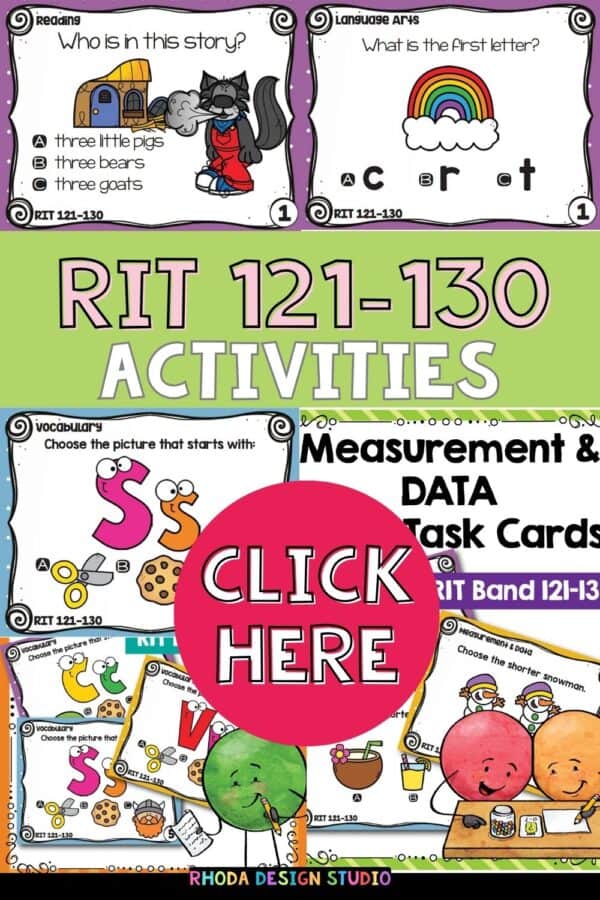
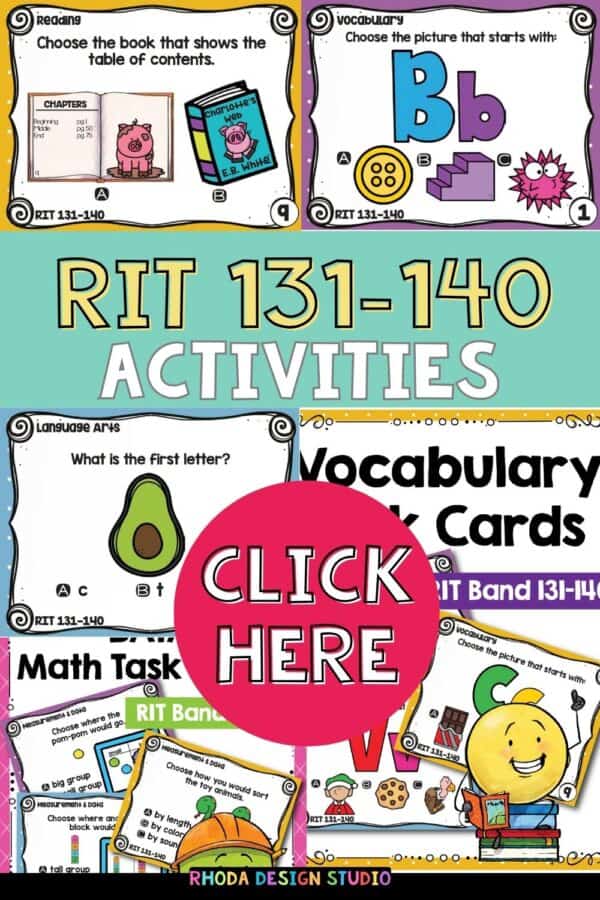
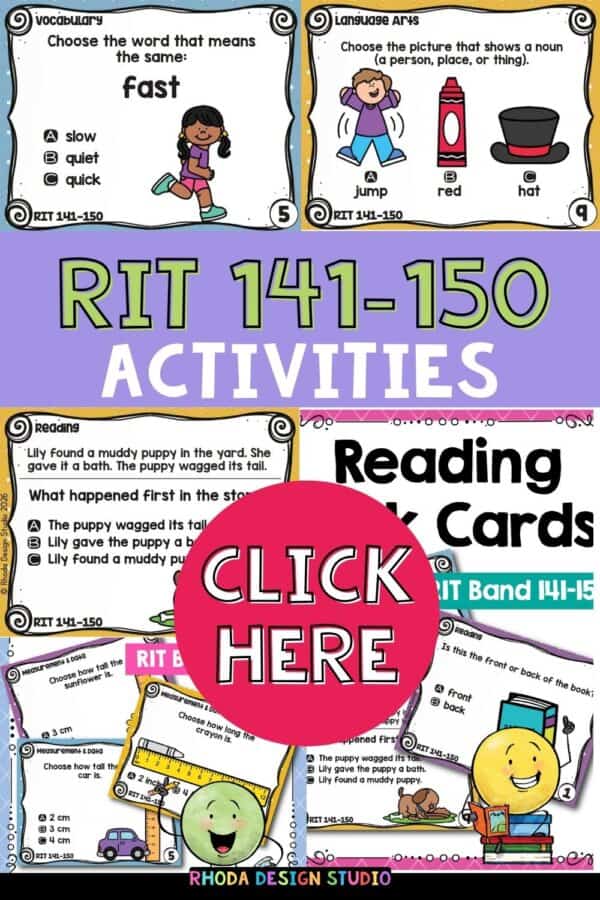
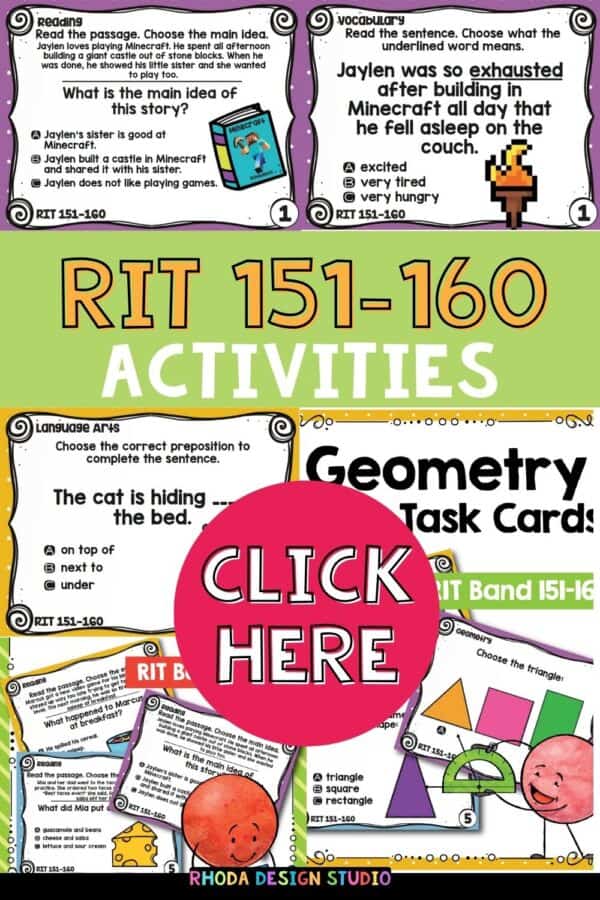
Eleven NWEA RIT bands. One reference. Click your student’s band to find the math and reading skills, activity ideas, and small group structure that matches their level.
Each band post pulls skills directly from the CCSS standards mapped to that RIT range, so you can pick what to teach next instead of guessing. Built for K-5 classroom teachers, interventionists, and parents trying to support kids at home.
Find Your Student’s RIT Band
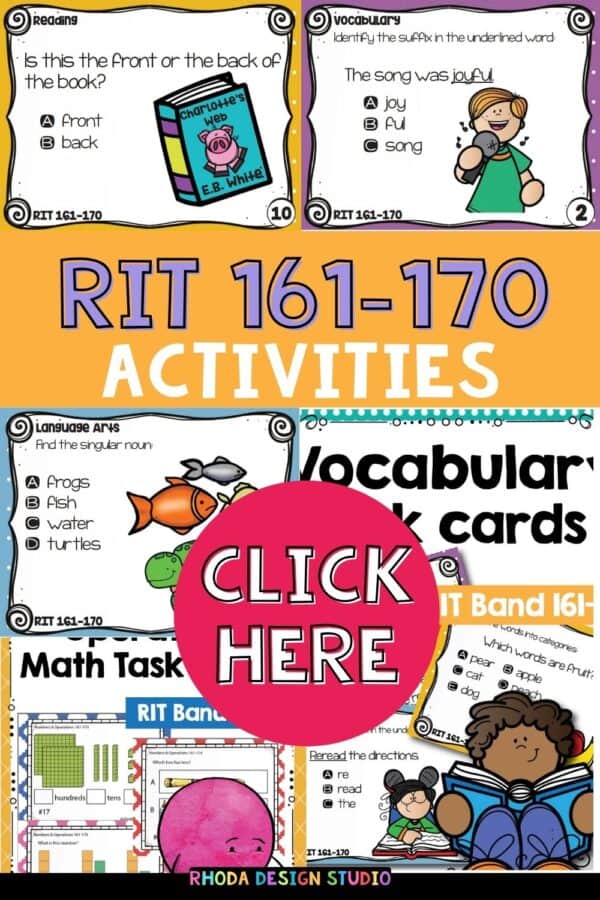
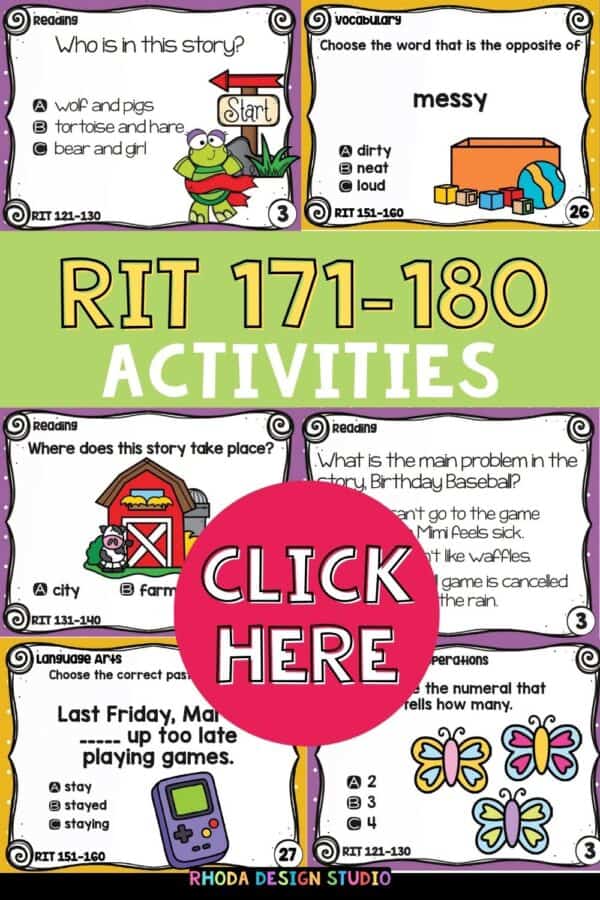
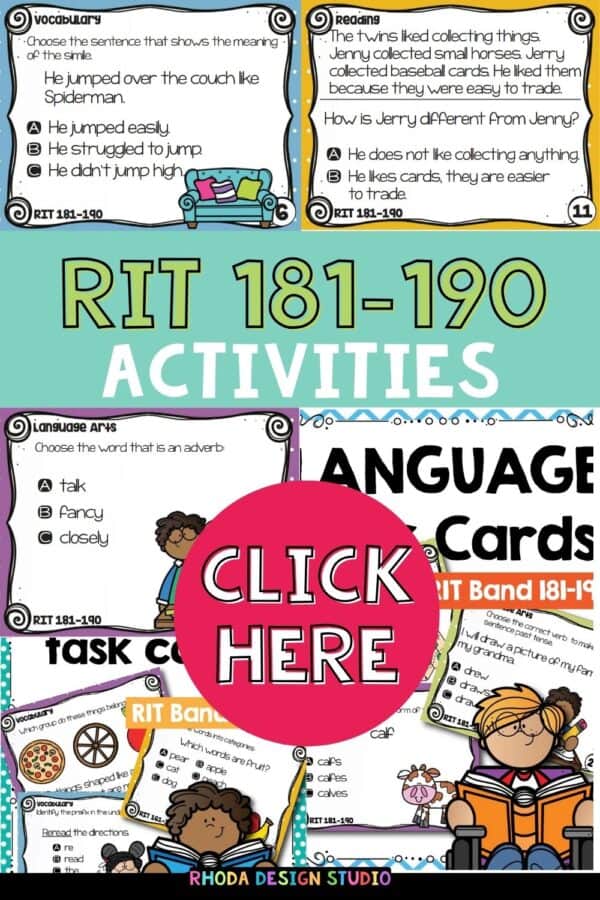
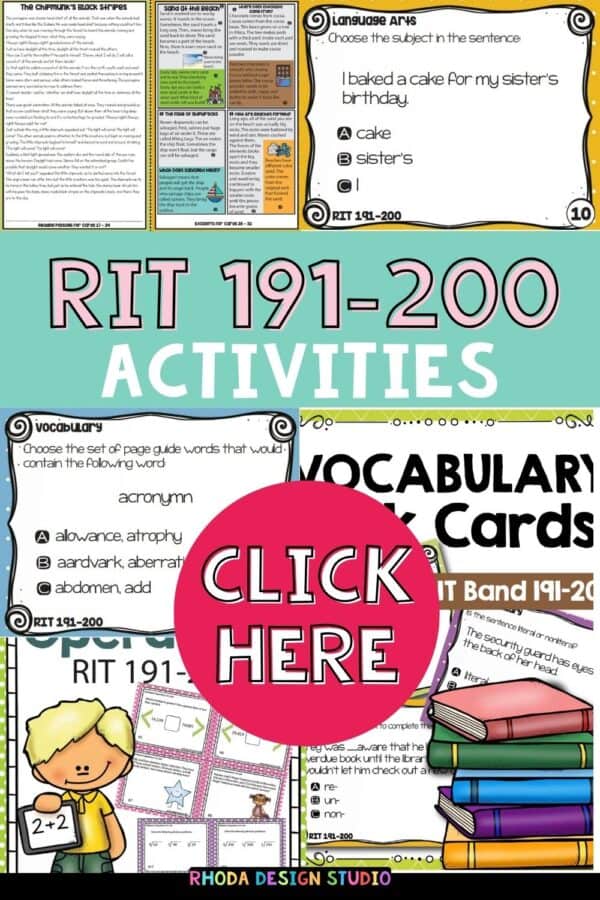
Click any band below to open the full activity guide for that RIT range. Each guide includes math AND reading skills, ready-to-use activity ideas, and small-group structure recommendations.
How to Use This Guide
The teacher who finds this page usually has one of three questions in mind:
- “My student tested at RIT [X] — what do they need to learn next?” Click the band that includes their score. The post will show you the math and reading skills students at that band are ready for, plus activity ideas you can pull tomorrow morning.
- “I’m building small groups — how do I group kids by skill?” Group students who fall within the same band. The post for that band shows the priority skills to focus on for the first three weeks.
- “My older student tested below grade-level norms — where do I start?” Click the band that matches their actual score, not their grade. The instructional content is the same regardless of grade — band-based grouping is what makes intervention efficient.
Don’t try to teach all the skills in a band at once. Pick ONE priority skill per subject and stay with it for at least three weeks. Three weeks of focused practice on one skill produces more measurable growth than three weeks of touching ten skills lightly. The band posts each include a short “Building a Small Group” section with high-leverage skill choices for that band.
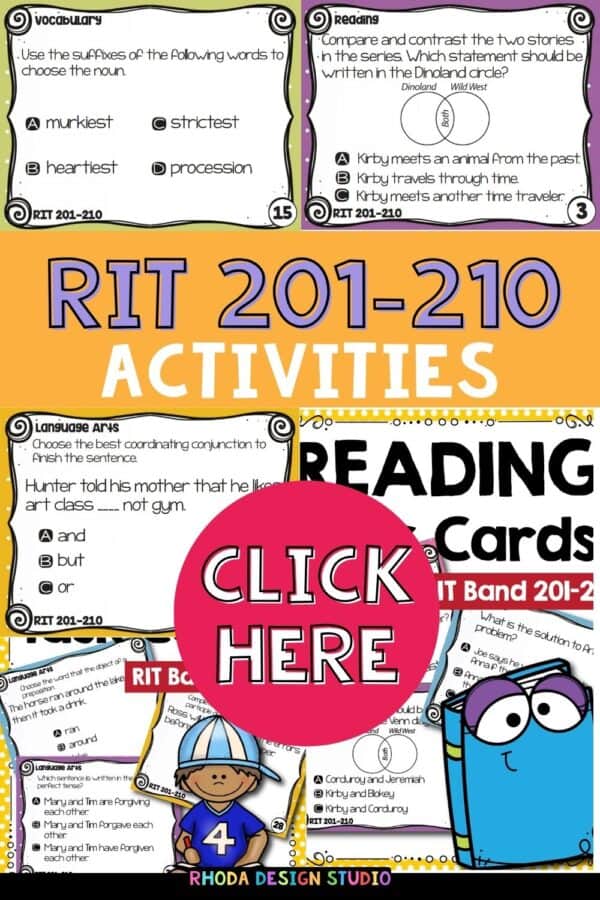
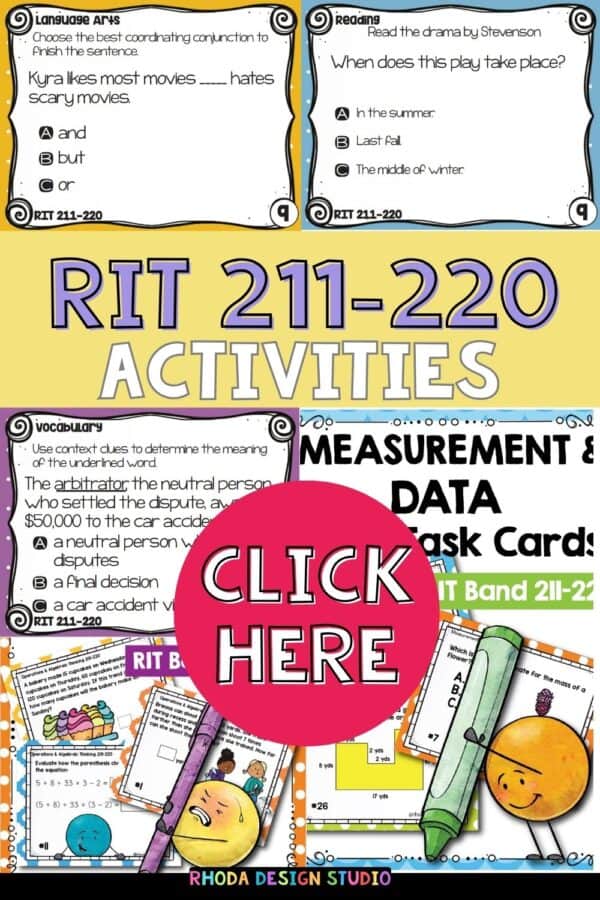
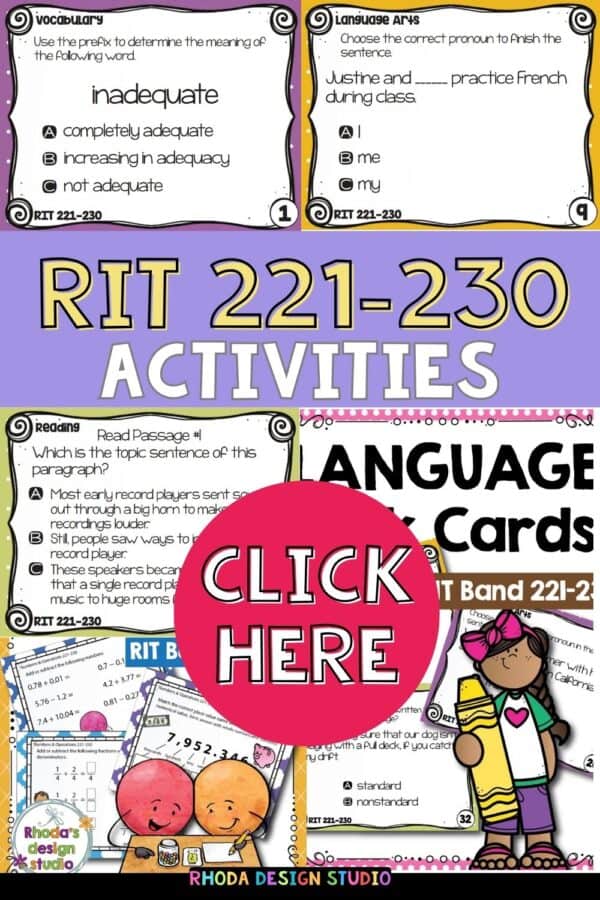
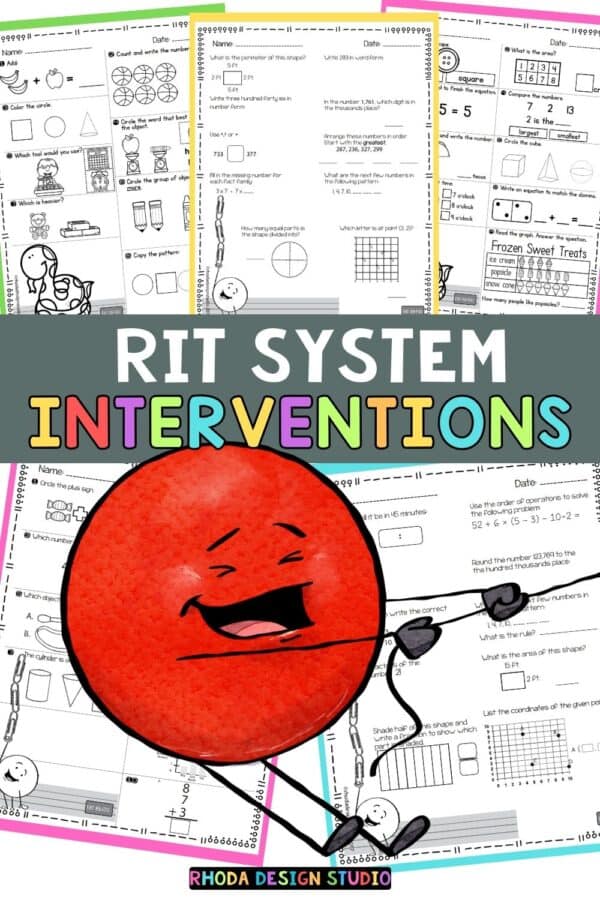
Free Math or Reading Samples
Pick the subject you’re teaching to get free band-organized samples sent to your inbox. Each set includes worksheets and task card samples across the K-5 RIT range, sorted by band so you can pull what matches your students’ levels.
What Are RIT Bands?
RIT (Rasch Unit) is the score system NWEA’s MAP assessment uses to measure what a student knows and is ready to learn. Unlike percentile rankings (which compare students to each other), RIT scores measure the student against the content itself — the same way a ruler measures inches regardless of who you’re measuring.
RIT scores are grouped into bands of 10 points (e.g., RIT 171-180). Each band represents a coherent set of skills students at that level are ready to learn. Two students at RIT 175 — one in 1st grade and one in 4th grade — are working on the same instructional content, even though they’re in different grades. This is what makes band-based grouping so effective for small-group instruction and Tier 2 intervention.
For more on how to read MAP reports and use RIT scores effectively, see How to Read Your Student’s MAP Report and What RIT Score Should My Student Have?
Frequently Asked Questions
My student is between two bands — which post should I read?
Pick the band that includes their score. RIT 175 is in the 171-180 band; RIT 180 is also in 171-180 (the upper edge); RIT 181 is the start of 181-190. If a student tests at the upper edge of a band, the activity ideas at that level often build directly into the next band’s skills.
Should I plan by RIT band or by grade level?
For small-group and intervention work, plan by RIT band. Two 4th graders at RIT 175 and RIT 195 have very different instructional needs even though they’re in the same grade. For whole-class core instruction, plan by grade-level standards. The two systems complement each other — small group fills the gap between core instruction and the student’s actual readiness level.
My student tested below RIT 121 — where do I start?
Students consistently testing below RIT 121 are typically working at content levels outside the K-5 NWEA norming sample. The right next step is comprehensive developmental assessment with specialists in early childhood, speech-language pathology, or special education. MAP isn’t necessarily the right tool for assessment at that level.
My student tested above RIT 230 — what now?
Students consistently testing above RIT 230 are working at content levels typically considered middle school or higher. The conversation shifts from band-based intervention to grade-level acceleration, advanced course placement, or specialized gifted programming. MAP K-5 norm samples don’t extend much above this band.
Are these activities aligned to specific curricula?
The skills in each band post are pulled directly from the CCSS (Common Core State Standards) mapped to that NWEA RIT range. They align with most major K-5 ELA and math curricula because most curricula are themselves CCSS-aligned. The activities are research-supported instructional strategies that work across curriculum brands.
How often should I use these activities?
For most bands, 2-5 small group sessions per week of 10-25 minutes each, depending on the band. Younger bands need more frequent, shorter sessions; older bands benefit from less frequent but longer sessions. Each band post includes specific frequency and duration recommendations for that level.
More Help With MAP Scores
- MAP Scores Are In — Now What? — A workflow for K-5 teachers and parents the day MAP scores arrive
- How to Read Your Student’s MAP Report — A walkthrough of every chart and number on the report
- What RIT Score Should My Student Have? — Grade-level norms and how to interpret your student’s score
- How to Talk to Parents About MAP Scores — A 5-part conference script for teachers