Fall MAP Testing Prep: A Back-to-School Guide for K-5 Teachers
Fall NWEA MAP testing is two to three weeks out. Maybe one. Your roster might still be shifting. Your testing schedule might still be in flux. And somewhere on your to-do list is “prepare students for MAP” — which is vague enough to have been on the list for weeks without you actually doing it.
This post is the back-to-school MAP prep guide for K-5 teachers. Two parts: classroom logistics (the practical setup work for testing week) and student prep (what students actually need to know and do before the test). Built for teachers who’ve taught MAP before AND first-year teachers walking into their first fall testing window.
Free math and reading samples are linked at the bottom — band-organized worksheets that you’ll want once scores come back and you’re building small groups in October.

What MAP Actually Tests (and What It Doesn’t)
Before walking students into the testing window, it helps to be clear on what MAP is — both for your own framing and for any parent emails you’ll send in the next two weeks.
NWEA’s MAP (Measures of Academic Progress) is a computer-adaptive assessment. As students answer questions correctly, the test gets harder. As they miss questions, it gets easier. The goal isn’t a percentage score — it’s identifying the RIT level where the student is ready to learn next. The test takes about 45-60 minutes per subject (reading + math), and most schools test 3 times per year (fall, winter, spring).
What MAP doesn’t test:
- Mastery of grade-level content (it tests readiness across a wide range)
- State standards specifically (it correlates with CCSS but isn’t a state test)
- Whether students “passed” or “failed” — there’s no passing score
- Effort, behavior, or character — only academic readiness
This framing matters because parents and students often arrive at MAP testing assuming it works like a traditional test. The clearer you are about what it measures, the less anxiety students bring into the testing room.
Part One: Classroom Logistics
The logistical work matters more than most teachers realize. A student who tests in a chaotic environment scores lower than the same student in a well-run testing block — not because of academic ability, but because attention and focus shape adaptive test results.
3 weeks before testing
- Confirm your testing schedule with your school. Get the testing block dates and times in writing. Confirm the testing room (your classroom? a computer lab? a shared space?). Confirm whether students need headphones (most fall MAP tests do).
- Verify student rosters and accommodations. Pull up your class roster and verify every student is registered for MAP. Check that any students with IEP testing accommodations (extended time, read-aloud, breaks) are flagged correctly in the NWEA system.
- Test your devices. If students are testing on Chromebooks or iPads in your classroom, log into NWEA on each device this week. You don’t want to discover that 4 of 22 devices won’t connect on test day.

2 weeks before testing
- Set up the testing room layout. Plan where students will sit. Spaced apart, eyes on their own screens, with headphones if required. If you can choose where students sit, sit your most distractible students on the periphery, not in the middle of the action.
- Stock up on testing-day supplies. Sharpened pencils (yes, even on computer-based tests — for scratch work), scratch paper, headphones (school-issued or a backup set if students bring their own), tissues, water bottles for any student who needs them.
- Send a parent communication about the testing window. A 3-4 sentence email or class app message: when testing happens, that students should sleep well and eat breakfast, that there’s no studying or homework to do beforehand, and that scores will come back in 2-4 weeks. (More on the parent message in a moment.)
1 week before testing
- Run a 5-minute device check-in with students. Have them log in, navigate to the practice MAP test, and successfully take 2-3 practice questions. This isn’t about practicing — it’s about confirming every student CAN log in and navigate the platform on their device.
- Identify your “anchor students” — kids who tend to finish quickly or kids who tend to need bathroom breaks. Plan ahead for both. Quiet activity ready for early finishers (independent reading is the simplest); a clear bathroom-break protocol that doesn’t disrupt the testing room.
- Confirm your accommodation plan is documented and that you have a signed copy of any IEPs that specify testing accommodations. If a student needs read-aloud, you need a person who can do it — that’s not always you.

Day of testing
- Test in the morning if possible. Student attention is highest in the first 90 minutes of the school day. Save afternoons for instruction, not testing.
- Brief students on test expectations before logging in. 2-3 minutes max: read every question carefully, the test gets harder when you answer correctly (so harder questions mean you’re doing well), don’t rush, take breaks if you need them.
- Stay neutral during the test. Don’t help students with content — that invalidates results. Do help with technical issues (frozen screen, login problems). Walk the room quietly, monitor for engagement, but don’t hover.
- End the test on time. If a student isn’t finished at the end of the allotted block, follow your school’s protocol — usually they finish during a separate block, not a different day.
Part Two: Student Prep
Student preparation for MAP is different from preparation for a traditional test. You can’t “study for MAP” in the way students study for a unit test — the test adapts to whatever they know, so cramming doesn’t help.
What you CAN do: prepare students for the FORMAT and EXPERIENCE of the test, so they’re not navigating new test mechanics during the testing window. The format prep is what actually moves scores.
Format prep that actually helps
- Practice the question types students will see. MAP uses multiple-choice, drag-and-drop, fill-in-the-blank, and click-to-select formats. Students who haven’t seen these formats in instruction can lose 5-10 minutes of test time figuring out how each one works. NWEA publishes practice tests on their website — assign 1-2 of these in the week before testing.
- Practice using the on-screen tools. MAP includes a calculator (for some math questions), a highlight tool, and a “skip and return” button. Students who haven’t practiced these tools won’t use them on test day. 5-minute classroom demo, ideally a few days before testing.
- Teach the “harder questions = doing well” mindset. Students who don’t understand the adaptive nature of the test often panic when questions get harder. They think they’re failing. Reframe: harder questions mean the test is finding the right level for you, which means it’s working. Practice this language out loud with students before testing.
- Practice the “skip and return” strategy. Students should know they can skip a question and return to it within the same section. Don’t get stuck. This is the single most important strategy a student can use during MAP.
Format prep that doesn’t help (skip these)
- Studying specific content “that might be on the test.” Because MAP adapts, you can’t predict what content a specific student will see. Teaching to the test wastes instructional time and doesn’t produce score gains.
- Long practice tests right before testing. A full-length practice MAP the day before testing produces test fatigue without meaningful prep value. Short, focused format prep (15-20 minutes) beats long practice tests.
- “Pep talks” that increase anxiety. “This test is really important, do your best!” raises stakes for students. Counterproductive. Better message: “This is a test that helps me know how to teach you. Take your time, try your best, and don’t worry about any single question.”
Skill warm-ups (the right way)
You can’t prep for MAP content directly — but you CAN run light skill review on the most foundational skills students should already have. The goal isn’t to teach new content; it’s to wake up dormant knowledge so students don’t lose questions to forgotten skills.
Useful 10-15 minute warm-ups for the week before testing:
- Math facts review at the level students should already know (addition/subtraction within 20 for K-2, multiplication facts for 3-5)
- Sight word fluency for K-1 — flash review of high-frequency words students should recognize
- Vocabulary “in context” practice for grades 3-5 — short passages where students determine word meaning from context (a high-frequency MAP question type)
- Reading short passages and identifying main idea — another high-frequency MAP question type that benefits from light review
Notice none of these introduce new skills. They activate existing skills students should already have. That’s the difference between useful prep and wasted prep.
The Parent Communication Template
Send this 1-2 weeks before testing. Adjust dates and tone for your communication style:
Hi families,
Our class will take the fall NWEA MAP test the week of [DATE]. The MAP test is a computer-adaptive assessment that helps me understand what your child is ready to learn next. There’s no studying needed — students can’t really prepare for this test in advance, and that’s by design.
What helps most: a good night’s sleep the night before, breakfast on testing day, and arriving on time. Please don’t put pressure on your child about the score — the test is meant to inform my instruction, not to grade them.
Scores will come back in 2-4 weeks. I’ll share your child’s results then, along with what we’ll be working on in small group based on their RIT score. If you have any questions about MAP testing, please reach out — happy to chat.
Thanks,
[Your name]
Three sentences too long? Cut the second paragraph. Two sentences too long? Cut everything except dates + “no studying needed” + “scores in 2-4 weeks.”
After the Test: What Comes Next
Once the testing window closes, you wait. Most schools release MAP scores 2-4 weeks after testing. During that window, your job isn’t intervention work yet — your students don’t have data to act on. Use that time to:
- Continue establishing classroom routines and small-group structures
- Build relationships with students so the small-group placements you’ll make in October feel natural, not abrupt
- Continue teaching grade-level core content — MAP doesn’t dictate your scope and sequence
When scores arrive, that’s when the real planning starts. The day scores arrive is its own workflow — see MAP Scores Are In — Now What? for the score-day playbook. From there, you’ll want to identify each student’s RIT band and build small groups by band — see RIT Band Activities for the full band-by-band guide.
Free Math or Reading Samples
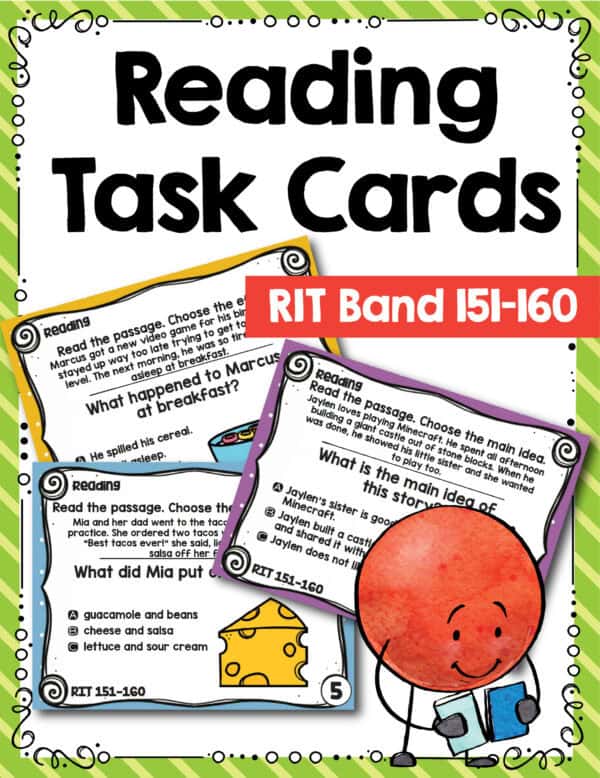
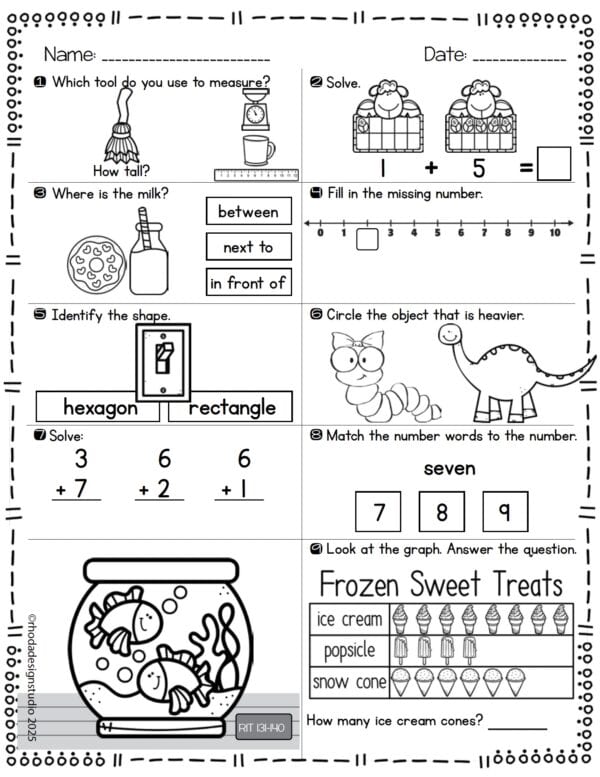
Once scores come back, you’ll be building small groups by RIT band. Get free band-organized samples now so you have them ready when scores arrive in October. Each set includes worksheets and task card samples sorted by RIT band — pick math or reading depending on what subject you’re teaching.
Frequently Asked Questions
Can students study for the MAP test?
Not really. MAP is computer-adaptive, which means the test gives each student different questions based on their responses. There’s no fixed content to study. What helps is format prep (knowing how the test works, practicing the question types) and basic skill warm-ups on foundational content. What doesn’t help is studying specific facts or doing long practice tests.
How long does the fall MAP test take?
Typically 45-60 minutes per subject. Most schools test reading and math separately, often on different days. K-2 students may take longer because the test reads questions aloud. The test isn’t timed — students can take as long as they need within the testing window — but most students finish within the standard window.
When should I start prepping students for fall MAP?
Two to three weeks before the testing window. Earlier prep loses freshness; later prep doesn’t give enough runway to address device issues, accommodation paperwork, or format unfamiliarity. Aim for a 2-3 week prep arc with classroom logistics in week 1 and student format prep in weeks 2-3.
My student is anxious about MAP testing. What helps?
Reframe. MAP isn’t a pass/fail test, isn’t graded, and isn’t compared to other students in the way state tests are. The most useful framing for an anxious student is “this test helps your teacher know how to teach you better.” Light format practice (so the test feels familiar) and good sleep the night before do more than anything else.
What if a student has IEP testing accommodations?
Verify the accommodations are flagged in NWEA’s system before testing — extended time, read-aloud, breaks, and assistive technology can all be configured. If your school’s testing coordinator handles this, confirm with them in writing 1-2 weeks before testing. If accommodations aren’t set correctly, the test runs without them and you’ll need to retest.
When will fall MAP scores come back?
Typically 2-4 weeks after testing. Scores are released to teachers and administrators first; parent reports come a bit later in most schools. Plan to use the 2-4 week wait window for relationship-building and core instruction, not score-driven small group work.
Can I share MAP scores with parents at conferences?
Yes — and you should. Fall MAP scores are usually back in time for fall conferences. For a structured way to walk parents through their student’s RIT score, see How to Talk to Parents About MAP Scores.
Should I review test-taking strategies before MAP?
Yes — but ONE strategy, not many. The “skip and return” strategy is the single most important one: don’t get stuck on a hard question, skip it and come back. That’s the strategy worth teaching. Resist the urge to teach broader test-taking strategies — they confuse younger students and don’t move scores meaningfully.
Save This for Testing Week
Pin this so you have the prep checklist ready every fall — the logistics don’t change much year to year, and having the timeline 2-3 weeks before testing makes the difference between a smooth testing window and a chaotic one.

Final Thoughts
Fall MAP testing is more about logistics than instruction. The classroom logistics work — confirming devices, accommodations, schedules, parent communication — is what separates a smooth testing window from a chaotic one. The student prep work is small but specific: format familiarity, the skip-and-return strategy, and light skill activation. Don’t overprep, don’t underprep, and remember that the real planning happens after scores come back, not before. By October, your roster will have RIT scores attached to each student, and the actual intervention work begins.