RIT 201-210 Activities: What to Teach Math and Reading at This Band
Your student tested at RIT 205. Maybe RIT 208. Somewhere in the 201-210 band — upper-elementary territory where 4th-5th graders on grade level live, plus older middle school students working through targeted intervention. Now you need to figure out what to actually teach them this week.
This post is the answer for the 201-210 band specifically. Math AND reading skills broken down to what students at this band are ready to learn next, with activity ideas you can pull tomorrow morning. Built for K-5 teachers and interventionists who already know how to teach and just need the band-by-skill bridge.
The free score tracker linked at the bottom is what most teachers use to keep their group rosters and priority skills straight all year. Grab it before you start planning.
Who’s at RIT 201-210?
This band typically captures two student groups:
- On-grade-level students in 4th and 5th grade. The fall and winter norms for 4th-5th grade typically land in this band, so students testing here are exactly where they’re expected to be.
- Middle school students receiving Tier 2 intervention. Older students testing at this band are working on consolidating multi-step word problems, point-of-view analysis, and text-structure recognition before grade-level work clicks.
Same RIT band, very different grade-level contexts. The skills are identical regardless of grade — which is exactly why band-based grouping makes pull-out time efficient. A 6th grader at RIT 205 and a 4th grader at RIT 205 are working on the same skill cluster.
Math Skills at RIT 201-210
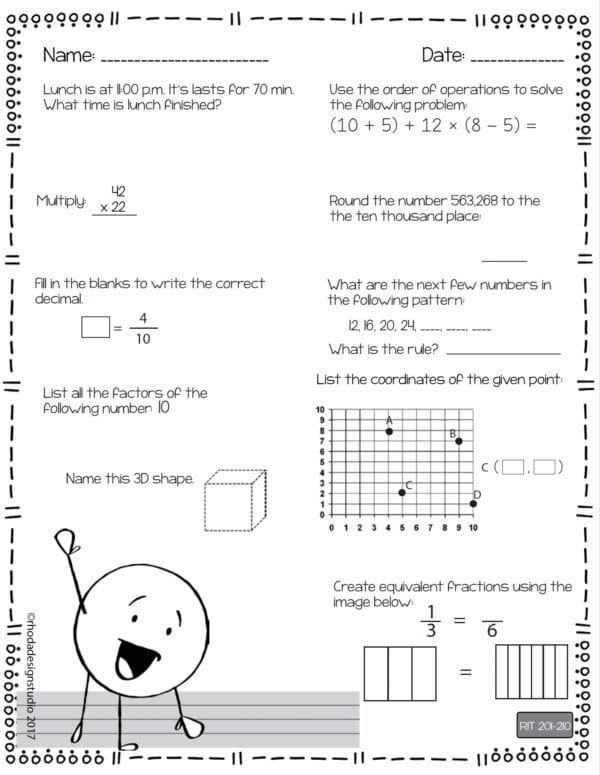
Math at this band is leaner than at lower bands — not because there’s less to teach, but because students are working on applying the operations they’ve already learned to more complex problems. Multiplication and division facts are fluent; the work is now in multi-step problem solving, area, and applied measurement.
Operations & Algebraic Thinking
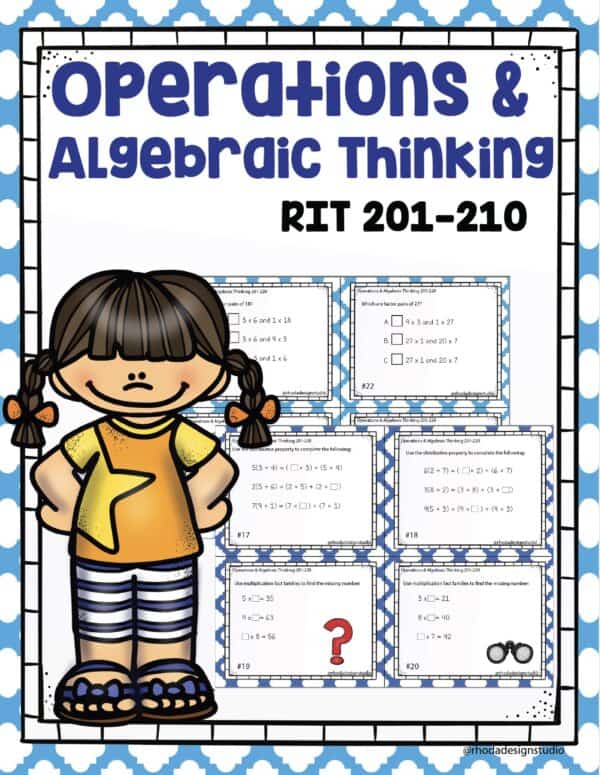
- Representing division word problems with an equation
- Solving multi-step word problems using the four operations
- Solving multi-step word problems with reasoning strategies
Activity ideas for Operations
- Multi-step problem deconstruction — students underline the question, circle the numbers, box the operation words, then plan their solution before solving
- “Show three strategies” practice — students solve the same problem three different ways (drawing, equation, mental math) and explain which was most efficient
- Word problem rewriting — given an equation, students write a word problem that matches it (reverse engineering builds equation comprehension)
- Two-step problem sorts — students categorize problems by which two operations are needed (add then multiply, multiply then subtract, etc.)
Number & Operations
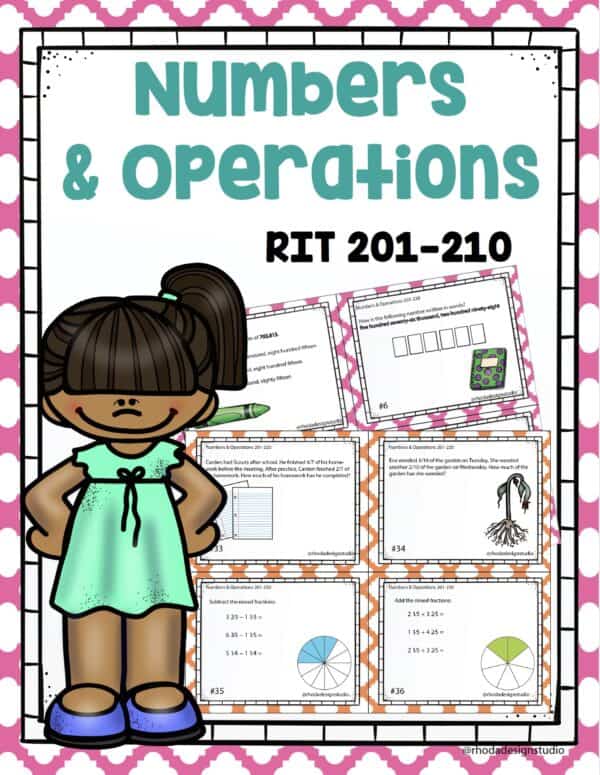
- Determining basic division facts (quotient less than 5)
- Determining the quotient (1-digit dividend and divisor; dividend less than 10; horizontal representation)
The number and operations content is genuinely lighter at this band — that’s because students are expected to apply these operations within the multi-step problems above, rather than practicing them in isolation. Don’t pad this section with practice work; instead, embed division fact practice INTO the multi-step problem work.
Measurement & Data
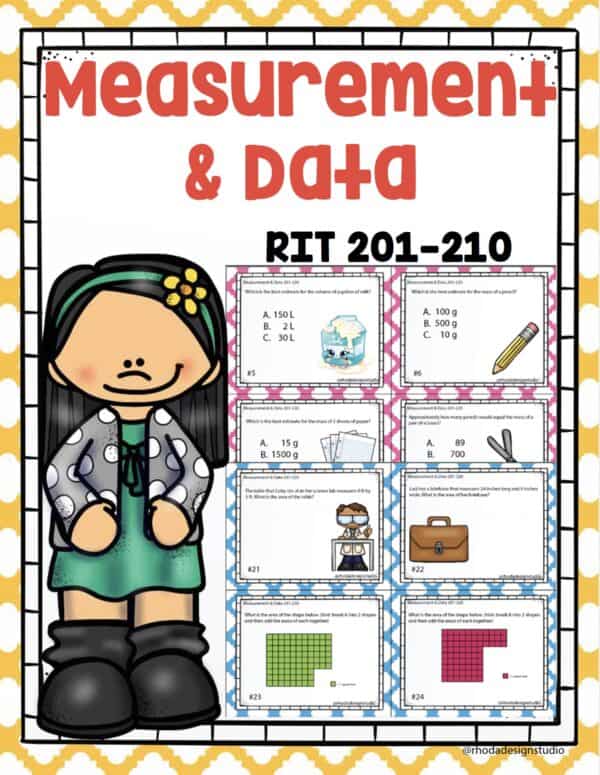
- Determining elapsed time (30-minute intervals using analog clock)
- Determining the change in height of a growing object over time using a ruler
- Determining the area of a rectangle (manipulative shown with grid lines)
- Determining elapsed time (30 minutes later, analog clock)
Geometry
- Drawing points, lines, line segments, rays, and angles (formal geometry vocabulary continuing from 191-200)
- Understanding properties of two-dimensional shapes
Activity ideas for Measurement & Geometry
- Area exploration on graph paper — students draw rectangles of various dimensions and count the unit squares; bridge to the formula L × W
- Elapsed time number lines — students draw start time and end time on a number line and count by 30-minute intervals
- Geometry term drawings — students draw and label points, lines, line segments, rays, and angles in their notebooks
- Shape attribute analysis — students sort shapes by multiple attributes (number of sides, number of right angles, parallel sides) using sorting mats
Reading and Language Skills at RIT 201-210
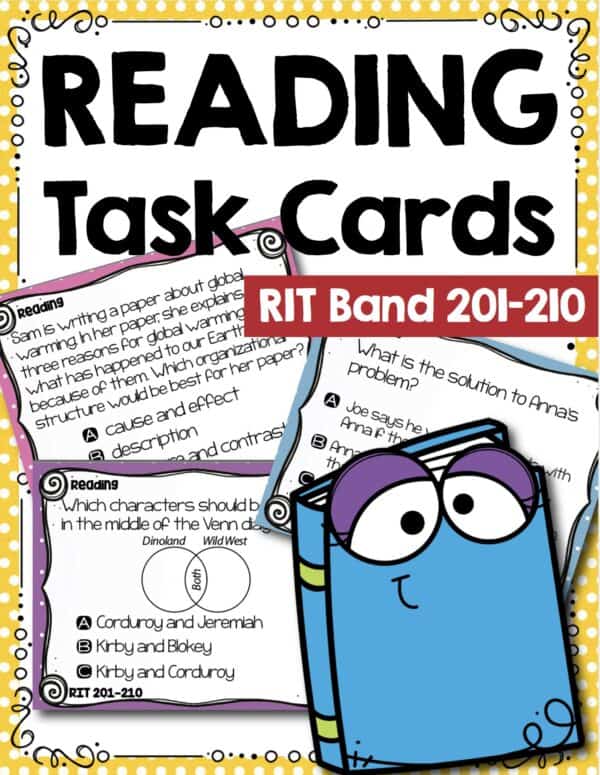
Reading at this band is firmly analytical. Phonics work has consolidated; the focus is point-of-view comparison, text structure analysis, literal vs. nonliteral language, and the kind of inferential thinking that defines upper-elementary and early-middle-school reading.
Phonics & Foundational Skills
- Selecting a word with four syllables
- Finding the correct way to divide a 2-syllable word
- Identifying 2-syllable words
The phonics content at this band is minimal because most students have consolidated decoding by this point. The remaining work is on syllabication for accurate spelling and reading multisyllabic words. Students still struggling with foundational phonics here likely need targeted intervention rather than band-level instruction.
Reading Literature
- Referring to parts of stories, dramas, and poems; describing how successive parts build on earlier sections
- Distinguishing one’s own point of view from that of the narrator or characters
- Acknowledging differences in the points of view of characters
- Determining the meaning of words and phrases as they are used in a text, distinguishing literal from nonliteral language
- Explaining how a series of chapters, scenes, or stanzas fits together to provide the overall structure of a story, drama, or poem
- Explaining how an author develops the point of view of the narrator or speaker in a text
Reading Informational Text
- Locating the main idea of an informational paragraph
- Using text features and search tools to locate information efficiently
- Distinguishing one’s own point of view from that of the author
- Inferring the author’s purpose in an informational passage
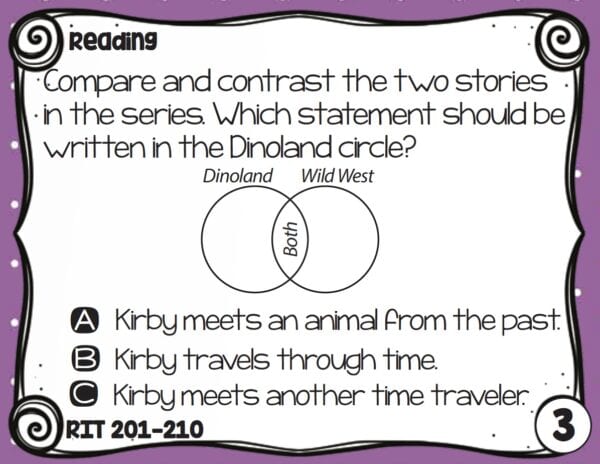
- Describing the logical connection between particular sentences and paragraphs in a text (comparison, cause/effect, sequence)
- Describing the overall structure of events, ideas, concepts, or information in a text
- Comparing and contrasting a firsthand and secondhand account
- Determining an author’s point of view or purpose
Activity ideas for Reading Comprehension
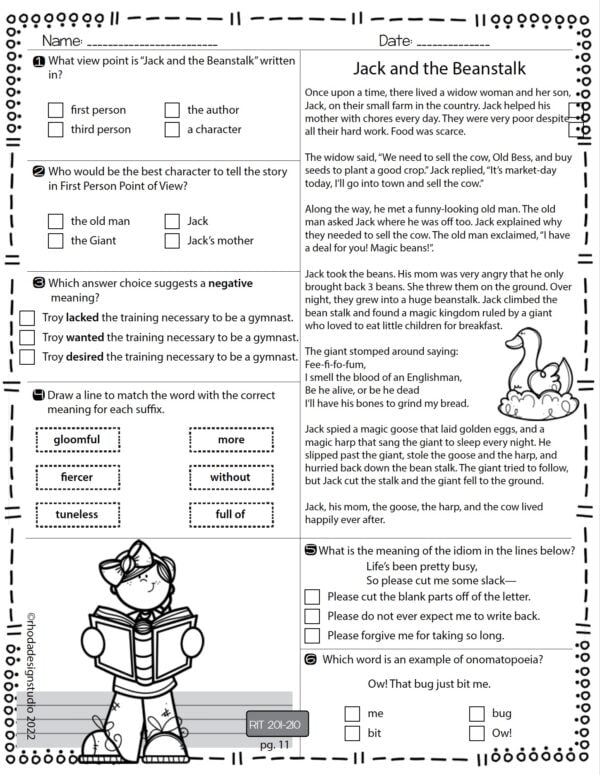
- Point-of-view T-charts — students compare narrator’s perspective vs. their own, OR character A’s perspective vs. character B’s, using text evidence in both columns
- Text structure mapping — given a science or history article, students label whether it uses chronological, cause-and-effect, compare-and-contrast, or problem-solution structure
- Literal vs. nonliteral language sorts — given phrases from a text, students decide which are literal (“the dog barked”) and which are figurative (“she was a tornado”)
- Firsthand vs. secondhand account comparisons — students read two versions of an event (e.g., a diary entry vs. a news article) and compare what each one captures and misses
- Author’s purpose deep dives — students identify whether a passage is meant to persuade, inform, or entertain, AND find specific text evidence supporting their analysis
Language Arts
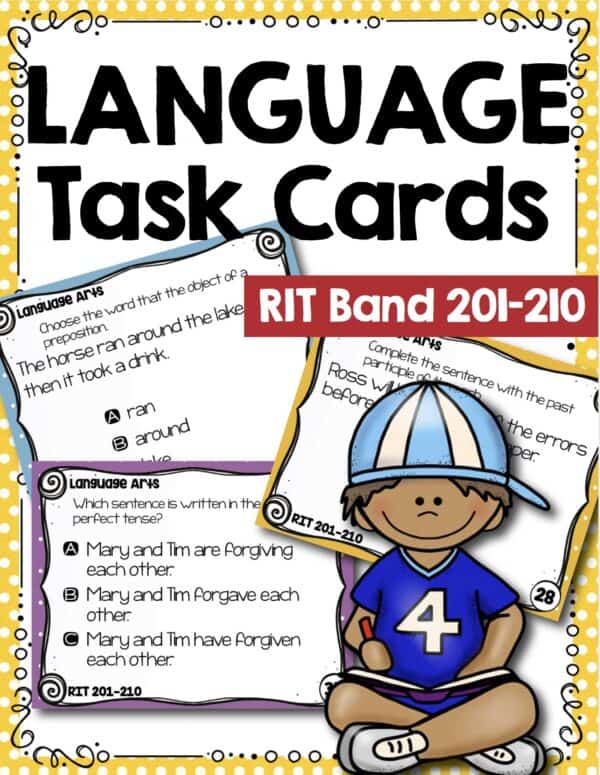
- Producing simple, compound, and complex sentences
- Ensuring subject-verb and pronoun-antecedent agreement
- Demonstrating command of the conventions of standard English grammar and usage when writing or speaking
Vocabulary
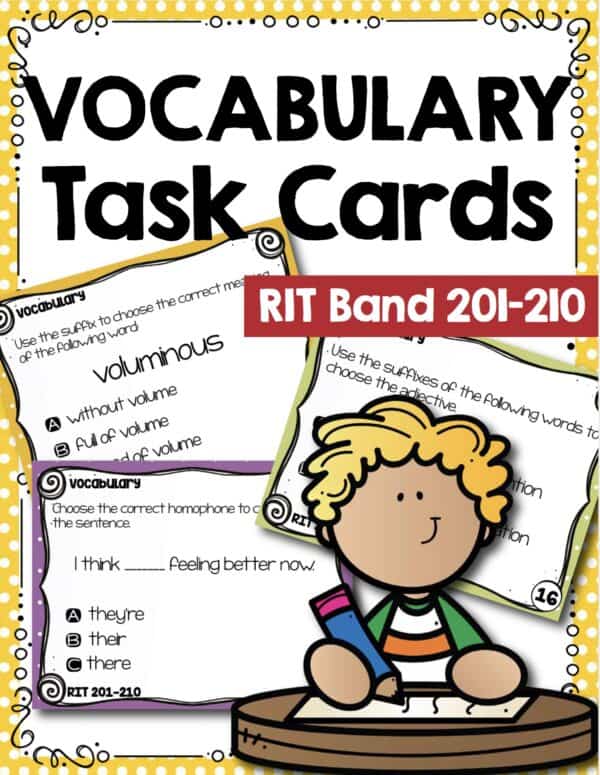
- Using sentence-level context as a clue to word meaning
- Identifying the base word in three-syllable derived words
- Using glossaries or dictionaries to determine the precise meaning of key words and phrases
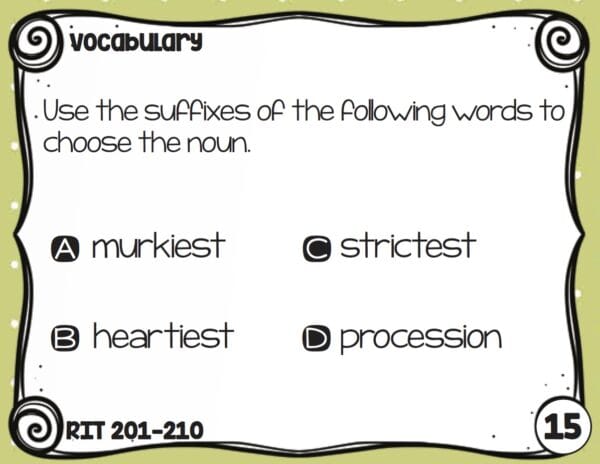
- Locating pairs of synonyms; using synonym pairs to complete a sentence
- Distinguishing literal and nonliteral meanings of words and phrases in context
- Determining the meaning of general academic and domain-specific words and phrases relevant to grade 3 topics
Building a Small Group at RIT 201-210
If you have multiple students in this band, here’s the practical structure for the first month of small group instruction:
Pick ONE priority skill per subject per group
Common high-leverage choices for this band:
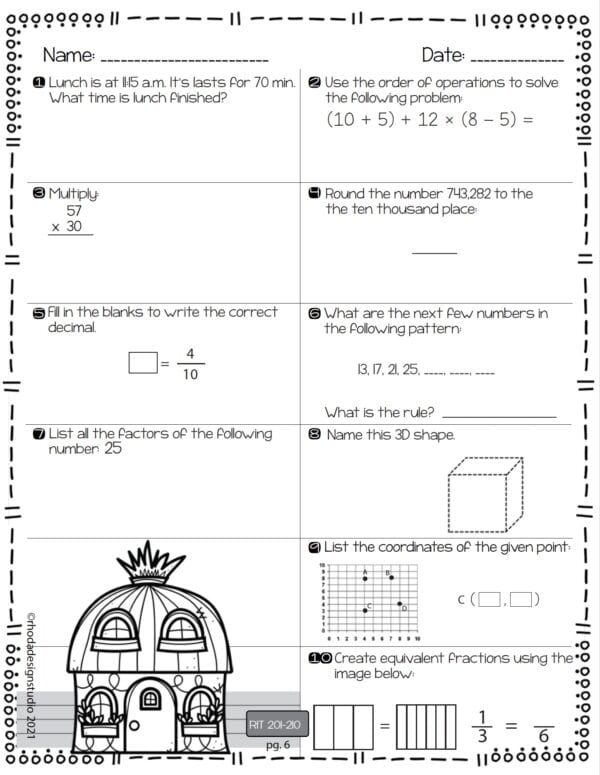
- Math: multi-step word problems with reasoning strategies, OR area of rectangles using grid models, OR elapsed time problems with analog clocks
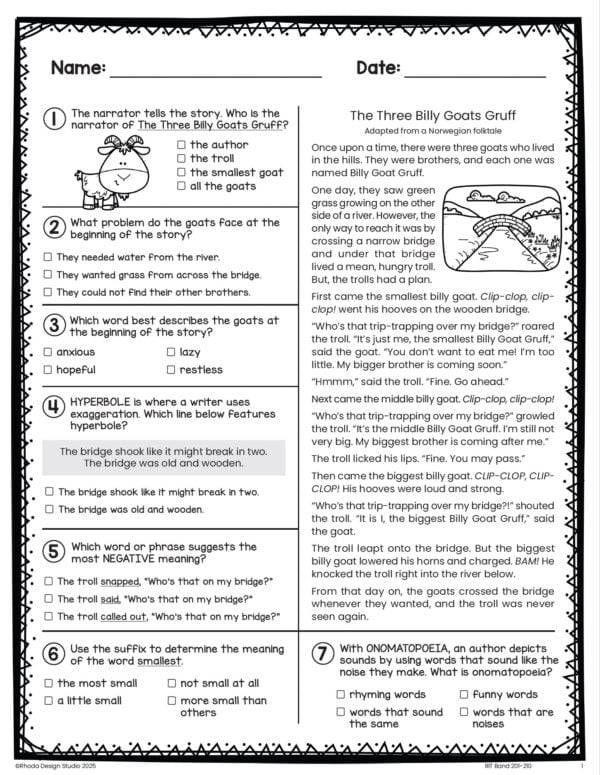
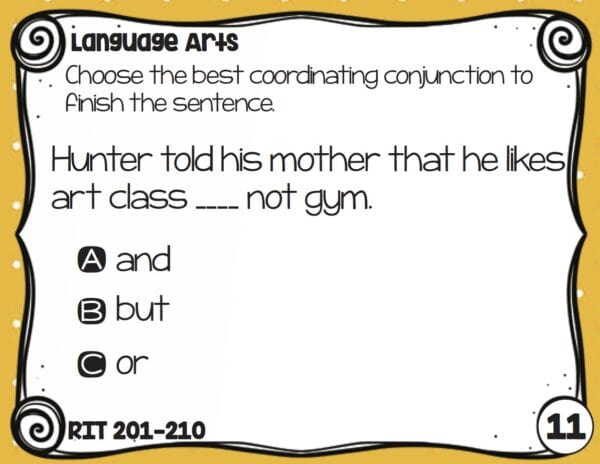
- Reading: point of view (narrator vs. self, character vs. character), OR text structure (chronological, cause-and-effect, compare-and-contrast), OR literal vs. nonliteral language identification
Three weeks of focused practice on one skill produces more measurable growth than three weeks of touching ten skills lightly.
Frequency and duration
Students at RIT 201-210 typically need 2-3 sessions per week of 20-25 minutes each. Older students at this band can sustain longer focused practice, and the analytical work (point-of-view analysis, text structure mapping) requires uninterrupted thinking time. Quality over frequency at this developmental level.
Materials
Materials at this band need to challenge students with grade-appropriate content while accounting for the wider age range of students working at this level. A 6th grader at RIT 205 needs work designed for 4th-5th grade content, but presented in a way that respects them as a near-middle-school student. Worksheets that look targeted at younger students will undermine engagement before the work begins.
The RIT Intervention System is built around band-organized materials — every worksheet, task card, and intervention pack is sorted by RIT band rather than grade. Materials labeled “RIT 201-210” rather than “4th grade” sidesteps the engagement problem for older students working at this band.
Stop the guessing game….
When parents and teachers see the same roadmap, everything changes for the child in between.

Where This Band Sits in the Bigger Picture
RIT 201-210 sits one band above RIT 191-200, which represents the division-fluency consolidation phase. Students typically progress out of this band into the 211-220 range as multi-digit multiplication, fractions, and analytical reading become routine.
For students who haven’t yet consolidated the prerequisite skills from this band, see RIT 191-200 activities for the foundational work that sets up 201-210 success. For more granular intervention support, see RIT 181-190 activities as well.
For the broader band-by-band context, see the math fluency activities by RIT band and reading fluency activities by RIT band overviews. For interpreting the score that puts students at this band, see how to read a MAP report. For the full index of all K-5 RIT bands, see RIT Band Activities.
Free MAP Score Tracker
The score tracker is a one-page-per-class document with columns for fall, winter, and spring scores plus seasonal goal cards. It includes:
- A roster row per student
- Math and reading columns side by side
- Notes space for priority skills and group placement
- Seasonal goal cards for fall, winter, and spring
- A version formatted for MTSS documentation
Drop your email below and the tracker comes to your inbox.
Frequently Asked Questions
What grade level is RIT 205?
RIT scores don’t translate directly to grade levels. RIT 205 is roughly the fall norm for 4th-5th graders in many recent NWEA samples, but the same score means something different for a 3rd grader (above the typical range) versus a 7th grader (below). The RIT score tells you what skills the student is ready to learn next.
How long do students typically stay in the RIT 201-210 band?
Students at upper-elementary bands typically progress more slowly than at lower bands — RIT growth slows naturally as students get older. A 4th grader on grade level might stay in 201-210 for most of the year before progressing to 211-220. Students in middle school intervention often take longer because the analytical skills build on years of foundational work.
What’s the best math activity for RIT 205?
The best activity depends on the priority skill you’ve identified. For most groups at this band, the highest-leverage choices are multi-step word problems with reasoning strategies, area of rectangles on grid paper, or elapsed time word problems with analog clocks. Pick one and stay with it for at least three weeks before changing.
My 6th grader scored RIT 205 — what does that mean?
It means your student is ready to work on skills typical of 4th-5th grade norms. For an older student at this band, intervention should focus on the analytical reading skills (point of view, text structure, literal vs. nonliteral language) and applied math problem solving. Core grade-level instruction continues, with intervention filling in the prerequisite analytical skills.
How do I write IEP goals for a student at RIT 205?
Tie the goal to a specific skill at this band, not a target RIT score. “Student will identify the author’s point of view and provide two pieces of text evidence with 80% accuracy on a probe by winter testing” is measurable. “Student will reach RIT 215 by winter” is a comparison, not a goal — and it depends on factors outside your control.
How does RIT 201-210 differ from RIT 191-200?
RIT 191-200 is where division becomes a fluent operation and main idea with key details consolidates. RIT 201-210 is where multi-step problem solving becomes the dominant math focus and reading shifts toward point-of-view analysis, text structure recognition, and literal vs. nonliteral language. The math content is leaner; the reading content gets more analytical.
What if my student is at RIT 209 — should I push toward 211-220 skills?
Students at the upper edge of a band can often start working on the next band’s skills, particularly in their stronger domains. Multi-digit multiplication and fraction operations (211-220 skills) build directly on the multi-step problem work students do in 201-210.
Why does the math content list look shorter than at lower bands?
It’s shorter because students at this band are expected to APPLY the operations they’ve already learned, not practice them in isolation. Multiplication and division facts are fluent; the work happens within multi-step problems. The shorter list reflects the developmental reality, not a content gap.
Save This for Planning
Pin this so you have the band-specific skills handy each time you’re building small groups — fall, winter, or spring.
Final Thoughts
RIT 201-210 is the upper-elementary band — where 4th-5th graders on grade level overlap with middle school students in Tier 2 intervention. Same band, two contexts, identical instructional needs. Pick one priority skill per subject. Run two to three 20-25 minute sessions a week. Monitor with quick probes, not full retests. By winter MAP, you’ll have weeks of practice notes and a clear picture of who’s moving up to the next band.