Free Earth Day Word Search Puzzles for Kids
Three fun levels — easy, medium, and hard — for grades K through 8. Perfect for classrooms and families!
Save this for later! Pin this post so you can find these Earth Day word searches when you need them. They’re great for April, end-of-year science units, and nature study weeks too.
Earth Day is April 22nd, and it’s one of the best times to talk with kids about taking care of our planet. Whether you’re a teacher planning a fun Friday activity or a parent looking for something educational at home, a word search is a simple, no-prep way to sneak in some learning.
These three word searches go from beginner-friendly all the way to science-class challenging. Let’s take a look at each one!
Stop the guessing game….
When parents and teachers see the same roadmap, everything changes for the child in between.

🌿 Why Word Searches Are Great for Earth Day
Word searches do more than keep kids busy. When kids search for words like photosynthesis or biodiversity, they start to recognize those words — even before they know what they mean. That’s called vocabulary exposure, and it helps new words stick.
They’re also screen-free, easy to print, and work for a wide range of ages. You can use them as morning warm-ups, early finisher activities, or even a quiet center during a busy classroom day.
“Kids don’t need to know every word before they search for it. The puzzle itself sparks curiosity — and curiosity is where learning begins.”
📋 The Word Lists
Here are all three word lists, ready to use. You can build your own grid using a free word search generator, or use these lists as a vocabulary warm-up on their own.
Easy
🌞 Easy Level
10 words · Great for grades K–2
- Sun
- Tree
- Bird
- Rain
- Leaf
- Soil
- Wind
- Frog
- Nest
- Lake
Medium
🌱 Medium Level
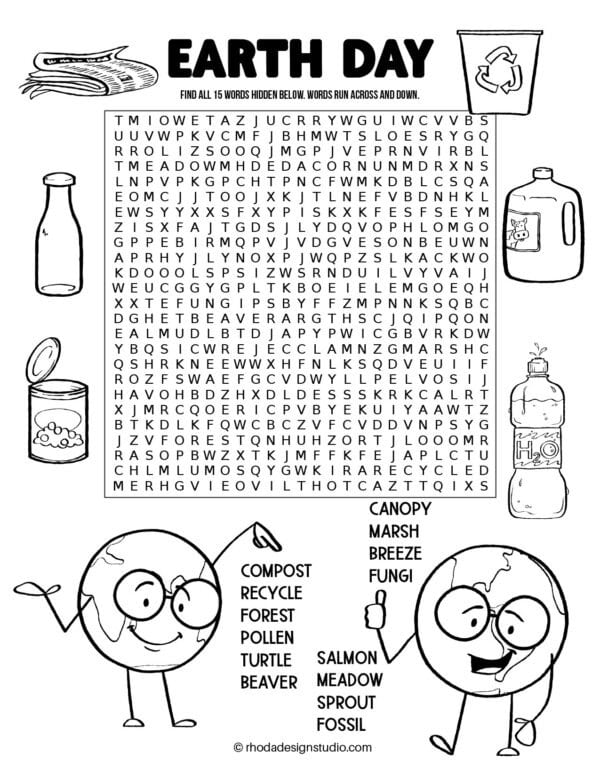
15 words · Great for grades 3–5
- Compost
- Recycle
- Forest
- Pollen
- Turtle
- Beaver
- Salmon
- Meadow
- Sprout
- Fossil
- Canopy
- Marsh
- Breeze
- Fungi
- Acorn
Hard
🌲 Hard Level
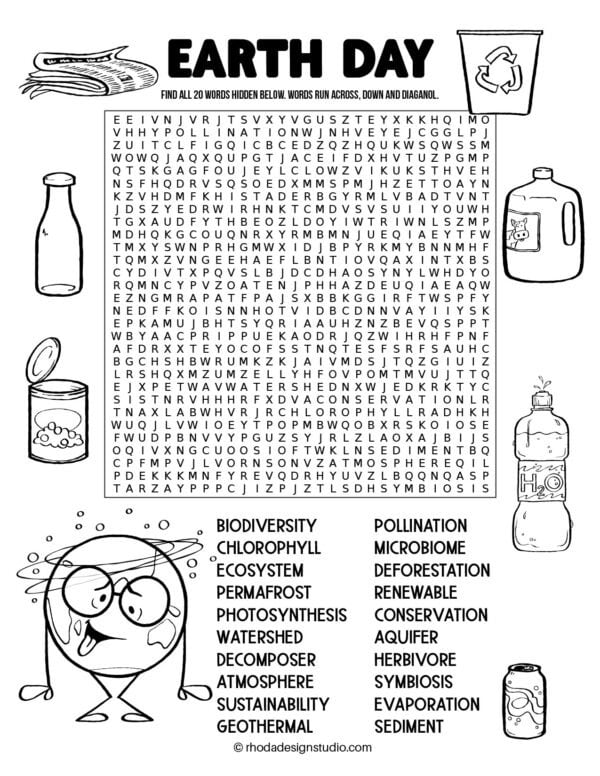
20 words · Great for grades 6–8
- Biodiversity
- Chlorophyll
- Ecosystem
- Permafrost
- Photosynthesis
- Watershed
- Decomposer
- Atmosphere
- Sustainability
- Geothermal
- Pollination
- Microbiome
- Deforestation
- Renewable
- Conservation
- Aquifer
- Herbivore
- Symbiosis
- Evaporation
- Sediment
🎓 How to Use Each Level
Easy Level (Grades K–2)
The easy list uses short, everyday nature words that young kids probably already know. This makes the puzzle feel fun and doable — not frustrating. Use it as a center activity or a calm-down task after recess. You can even turn it into an art project by having kids draw each word after they find it!

Medium Level (Grades 3–5)
The medium list mixes familiar words like recycle with new ones like canopy and fungi. This is a great level for building science vocabulary. Before handing it out, try a quick class discussion: “What do you think a canopy is? Where might you find fungi?” Those conversations make the words more meaningful.
Hard Level (Grades 6–8)
The hard list is loaded with real science terms. Words like photosynthesis, microbiome, and symbiosis are the building blocks of environmental science. After the puzzle, consider having students pick three words and write a sentence for each. It’s a simple extension that turns a fun activity into a writing practice too.
💡 Tips for Teachers and Parents
🖨️
Print & Go
Use a free word search generator like Discovery Education’s Puzzlemaker to build a printable grid in minutes.
🤝
Team It Up
Pair fast finishers with kids who need more time. Working together makes word searches less stressful and more social.
📖
Add a Definition
Write definitions on the board for the harder words. Kids can match words to meanings as they find them in the grid.
🌎
Go Bigger
Use the word lists as the start of an Earth Day bulletin board, class book, or nature journal activity.
🏠
Great at Home Too
These work just as well on the kitchen table as in a classroom. Print one for a rainy afternoon or a long car ride.
🎨
Color It!
Have kids use different colors for different categories — animals in blue, weather words in yellow, and so on.
🌍 Making Earth Day Stick All Year
Earth Day is April 22nd, but the ideas behind it — protecting nature, reducing waste, understanding ecosystems — are worth talking about all year long. Word searches are a tiny part of that, but they’re a start. When a kid can recognize and spell sustainability or conservation, those words become part of how they think about the world.
Even small moments of Earth Day learning add up. A word search today might spark a question, which might lead to a book, which might lead to a lifetime of caring about the planet. That’s a pretty good return on a five-minute activity!
Happy Earth Day to you and your kids! 🌱
🌿 Want More Earth Day Ideas?
Check out these other posts:
Save this post to Pinterest and share it with a teacher or parent friend who loves free, easy classroom activities.📌 Pin This Post
🌍 Free for classroom and home use · Earth Day · April 22nd