High Frequency Phonics Words: The Ultimate List for Free
Phonics is the heartbeat of early reading. When kids can crack the code of high-frequency phonics words, they build fluency, confidence, and a lifelong love for reading.
This master list sorts words by phonics patterns so you can find exactly what you need—whether you’re prepping for small groups, literacy centers, or at-home practice.
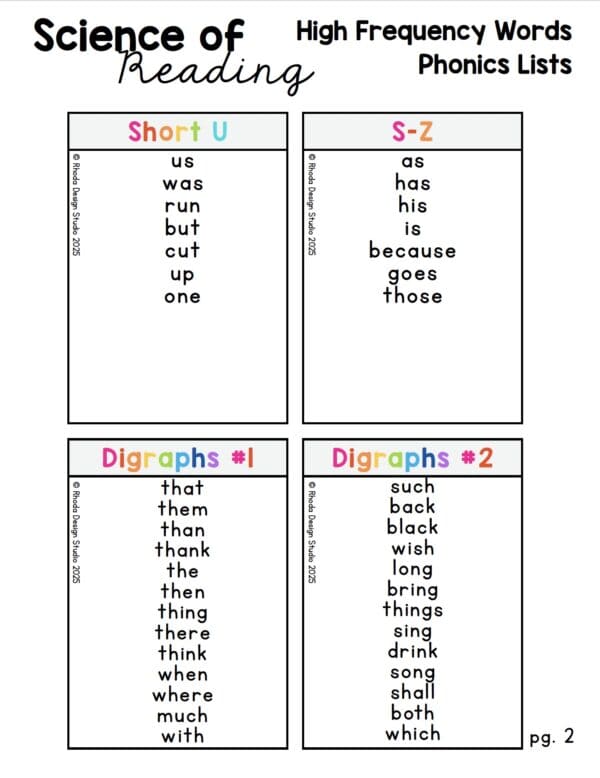
Short Vowels
Short A
- cat
- hat
- map
- jam
- sad
- bag
- ran
- can
Short E
- red
- net
- pen
- leg
- ten
- jet
- bed
- men
Short I
- sit
- pig
- win
- tip
- lid
- fin
- big
- him

Short O
- hop
- top
- dog
- pot
- log
- cot
- dot
- mom
Short U
- sun
- cup
- bug
- run
- mud
- fun
- tub
- jug

Consonant Sounds
S–Z
- sat
- sip
- sun
- zip
- zap
- zoo
- buzz
- fizz
Digraphs
- ship
- shop
- chat
- chin
- that
- this
- thin
- when
- photo
Blends
- flag
- stop
- trip
- clap
- frog
- slip
- plan
- drum

FSZL Rule
- off
- miss
- buzz
- ball
- hill
- fizz
- pass
- jazz
-VE Words
- have
- give
- live
- love
- dove
- above
- shove
- glove
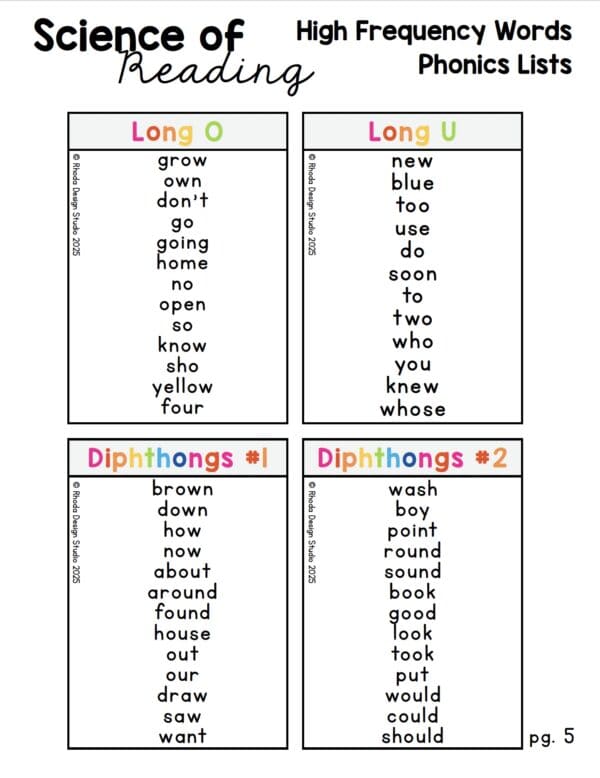
Long Vowels
Long A (a_e, ai, ay)
- cake
- late
- rain
- day
- play
- stay
- train
Long E (ee, ea, e_e)
- see
- tree
- seat
- meat
- these
- here
- eat
- need
Long I (i_e, igh, y)
- time
- like
- ride
- light
- night
- high
- my
- cry
Long O (o_e, oa, ow)
- home
- rope
- boat
- coat
- snow
- grow
- go
- so
Long U (u_e, ue, ew)
- cube
- rule
- blue
- true
- few
- new
- use
- cute

Advanced Patterns
Diphthongs
- coin
- boy
- toy
- out
- about
- cow
- how
- saw
R-Controlled
- car
- far
- her
- fern
- bird
- first
- fork
- corn
- turn
- hurt
Schwa
- about
- sofa
- pencil
- banana
- animal
- lemon
- button
- supply
Y as a Vowel
- cry
- try
- fly
- happy
- funny
- baby
- puppy
- lady
Instead of memorizing words as whole shapes (a practice research has shown to be ineffective), children build connections between the letters, sounds, and meanings of high-frequency words. This is especially important for “heart words”—those tricky words that may not follow typical phonics rules and require students to learn irregular parts by heart while still applying phoneme-grapheme knowledge.
Stop the guessing game….
When parents and teachers see the same roadmap, everything changes for the child in between.

By explicitly teaching high-frequency words through systematic phonics instruction, children strengthen their phonemic awareness, phonics knowledge, and sight word recognition. The payoff is huge: fluency increases, comprehension improves, and reading becomes less of a struggle and more of a joy.
For teachers and parents, having a bank of high-frequency phonics words sorted by patterns (like short vowels, digraphs, and r-controlled vowels) ensures that instruction is both systematic and sequential, aligning with the Science of Reading framework. In short, mastery of high-frequency words isn’t just about speed—it’s about building the solid word recognition foundation that every fluent, confident reader needs.